If you have not already got you tickets then please do so soon as there is only limited space ...
Abzan Keyword Action: Bolster
Abzan is the white-black-green clan. Its clan icon is a crossed pair of dragon scales. Dromoka is the dragon who embodies the Abzan ideal of endurance.
Bolster is a new keyword action that puts +1/+1 counters on your smallest creature, ensuring there are no weak links in your army.
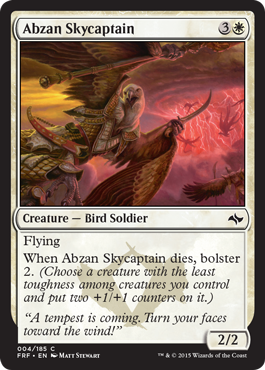
The official rules for bolster are as follows:
701.30. Bolster
701.30a "Bolster N" means "Choose a creature you control with the least toughness or tied for least toughness among creatures you control. Put N +1/+1 counters on that creature."
Bolster itself doesn't target any creature, though some spells and abilities that bolster may have other effects that target creatures. For example, you could put counters on a creature with protection from white with Abzan Skycaptain's bolster ability.
You determine which creature to put counters on as the spell or ability that instructs you to bolster resolves.
Jeskai Keyword: Prowess
Jeskai is the blue-red-white clan. Its clan icon is a dragon eye. Ojutai is the dragon who embodies the Jeskai ideal of cunning.
Prowess is a returning keyword that gives a creature a size bonus whenever you cast a noncreature spell. It hasn't changed since its appearance in the Khans of Tarkir set.
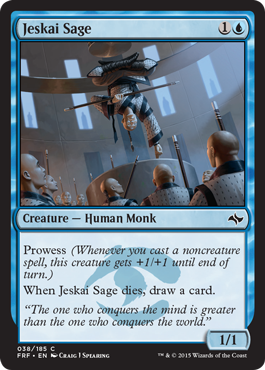
The official rules for prowess are as follows:
702.107. Prowess
702.107a Prowess is a triggered ability. "Prowess" means "Whenever you cast a noncreature spell, this creature gets +1/+1 until end of turn."
702.107b If a creature has multiple instances of prowess, each triggers separately.
Any spell you cast that doesn't have the type creature will cause prowess to trigger. If a spell has multiple types, and one of those types is creature (such as an artifact creature), casting it won't cause prowess to trigger. Playing a land also won't cause prowess to trigger.
Prowess triggers only once for any spell, even if that spell has multiple types.
Prowess goes on the stack on top of the spell that caused it to trigger. It will resolve before that spell.
Once it triggers, prowess isn't connected to the spell that caused it to trigger. If that spell is countered, prowess will still resolve.
Sultai Keyword: Delve
Sultai is the black-green-blue clan. Its clan icon is a single dragon fang. Silumgar is the dragon who embodies the Sultai ideal of ruthlessness.
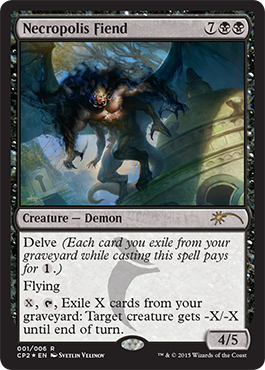
Delve is a returning keyword that lets you exile cards from your graveyard to help pay for spells. It hasn't changed since its appearance in the Khans of Tarkir set.
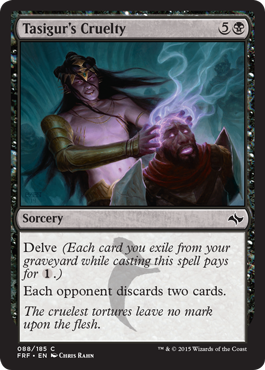
The official rules for delve are as follows:
702.65. Delve
702.65a Delve is a static ability that functions while the spell with delve is on the stack. "Delve" means "For each generic mana in this spell's total cost, you may exile a card from your graveyard rather than pay that mana." The delve ability isn't an additional or alternative cost and applies only after the total cost of the spell with delve is determined.
702.65b Multiple instances of delve on the same spell are redundant.
You exile cards from your graveyard at the same time you pay the spell's cost. Exiling a card this way is simply another way to pay that cost.
Delve doesn't change a spell's mana cost or converted mana cost. For example, the converted mana cost of Tasigur's Cruelty is 6 even if you exiled three cards to cast it.
You can't exile cards to pay for the colored mana requirements of a spell with delve.
You can't exile more cards than the generic mana requirement of a spell with delve. For example, you can't exile more than five cards from your graveyard to cast Tasigur's Cruelty.
Because delve isn't an alternative cost, it can be used in conjunction with alternative costs.
Mardu Keyword: Dash
Mardu is the red-white-black clan. Its clan icon is a pair of dragon wings. Kolaghan is the dragon who embodies the Mardu ideal of speed.
Dash is a keyword that lets you cast creature spells for an alternative cost, giving the creature haste and returning it to its owner's hand at the end of the turn.
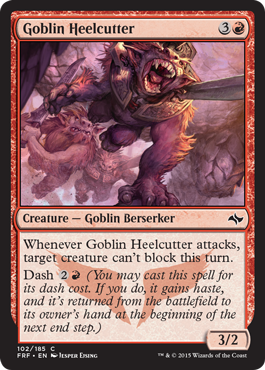
The official rules for dash are as follows:
702.108. Dash
702.108a Dash represents three abilities: two static abilities that function while the card with dash is on the stack, one of which may create a delayed triggered ability, and a static ability that functions while the object with dash is on the battlefield. "Dash [cost]" means "You may cast this card by paying [cost] rather than its mana cost," "If you chose to pay this spell's dash cost, return the permanent this spell becomes to its owner's hand at the beginning of the next end step," and "As long as this permanent's dash cost was paid, it has haste." Paying a card's dash cost follows the rules for paying alternative costs in rules 601.2b and 601.2e–g.
If you choose to pay the dash cost rather than the mana cost, you're still casting the spell. It goes on the stack and can be responded to and countered. You can cast a creature spell for its dash cost only when you otherwise could cast that creature spell. Most of the time, this means during your main phase when the stack is empty.
If you pay the dash cost to cast a creature spell, that card will be returned to its owner's hand only if it's still on the battlefield when its triggered ability resolves. If it dies or goes to another zone before then, it will stay where it is.
You don't have to attack with the creature with dash unless another ability says you do.
If a creature enters the battlefield as a copy of or becomes a copy of a creature whose dash cost was paid, the copy won't have haste and won't be returned to its owner's hand.
Temur Ability Word: Ferocious
Temur is the green-blue-red clan. Its clan icon is a dragon's claws. Atarka is the dragon who embodies the Temur ideal of savagery.
Ferocious is a returning ability word that appears in italics at the beginning of abilities that improve if you control a creature with power 4 or greater. (An ability word has no rules meaning.) It hasn't changed since its appearance in the Khans of Tarkir set.
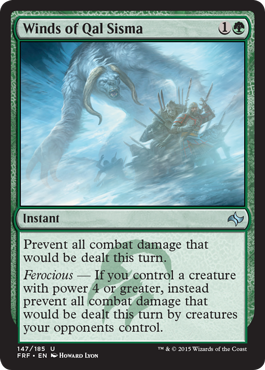
Some ferocious abilities that appear on instants and sorceries use the word "instead." These spells have an upgraded effect if you control a creature with power 4 or greater as they resolve. For these, you only get the upgraded effect, not both effects.
Ferocious abilities of instants and sorceries that don't use the word "instead" will provide an additional effect if you control a creature with power 4 or greater as they resolve.
See the "Card-Specific Notes" section for cards with static or triggered ferocious abilities and more information about how they work.
New Keyword Action: Manifest
The Spirit Dragon Ugin and his magic are very much alive in Tarkir's past. Manifest is a new keyword action that puts cards onto the battlefield face down as 2/2 creatures, hiding their true identities. If a creature card is put onto the battlefield this way, you can turn it face up at any time by paying its mana cost.
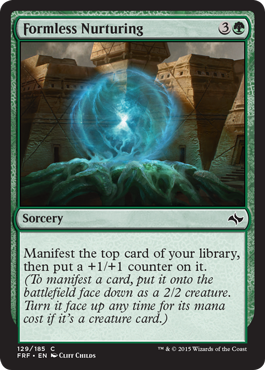
The official rules for manifest are as follows:
701.31. Manifest
701.31a "Manifest [a card]" means "Put [that card] onto the battlefield face down." That permanent is a 2/2 creature with no text, no name, no subtypes, and no mana cost. That permanent is a manifested permanent as long as it's face down. The effect defining its characteristics works any time the card is face down and ends when it's turned face up.
701.31b Any time you have priority, you may turn a manifested permanent you control face up. This is a special action that doesn't use the stack (see rule 115.2b). To do this, show all players that the card representing that permanent is a creature card and what its mana cost is, pay that cost, then turn the permanent face up. The effect defining its characteristics while it was face down ends, and it regains its normal characteristics. If the card representing that permanent isn't a creature card or doesn't have a mana cost, it can't be turned face up this way.
701.31c If a card with morph is manifested, its controller may use the procedure described in rule 702.36d to turn a face-down permanent with morph face up rather than the procedure described above to turn a manifested permanent face up.
701.31d If an effect instructs a player to manifest multiple cards from his or her library, those cards are manifested one at a time.
701.31e A face-down permanent represented by an instant or sorcery card can't be turned face up. If an effect instructs a player to turn one face up, its controller reveals it and leaves it face down. Abilities that trigger whenever a permanent is turned face up won't trigger.
701.31f See rule 707, "Face-Down Spells and Permanents," for more information.
The face-down permanent is a 2/2 creature with no name, mana cost, creature types, or abilities. It's colorless and has a converted mana cost of 0. Other effects that apply to the permanent can still grant or change any of these characteristics.
Any time you have priority, you may turn a manifested creature face up by revealing that it's a creature card (ignoring any type-changing effects that might be applying to it) and paying its mana cost. This is a special action. It doesn't use the stack and can't be responded to.
If a manifested creature would have morph if it were face up, you may also turn it face up by paying its morph cost.
Unlike a face-down creature that was cast using the morph ability, a manifested creature may still be turned face up after it loses its abilities if it's a creature card.
Because the permanent is on the battlefield both before and after it's turned face up, turning a permanent face up doesn't cause any enters-the-battlefield abilities to trigger.
Because face-down creatures don't have a name, they can't have the same name as any other creature, even another face-down creature.
A permanent that turns face up or face down changes characteristics but is otherwise the same permanent. Spells and abilities that were targeting that permanent, as well as Auras and Equipment that were attached to the permanent, aren't affected.
Turning a permanent face up or face down doesn't change whether that permanent is tapped or untapped.
At any time, you can look at a face-down permanent you control. You can't look at face-down permanents you don't control unless an effect instructs you to do so.
If a face-down permanent you control leaves the battlefield, you must reveal it. You must also reveal all face-down spells and permanents you control if you leave the game or if the game ends.
You must ensure that your face-down spells and permanents can easily be differentiated from each other. You're not allowed to mix up the cards that represent them on the battlefield in order to confuse other players. The order they entered the battlefield should remain clear. Common methods for indicating this include using markers or dice, or simply placing them in order on the battlefield. You must also track how each became face down (manifested, cast face down using the morph ability, and so on).
There are no cards in the Fate Reforged set that would turn a face-down instant or sorcery card on the battlefield face up, but some older cards can try to do this. If something tries to turn a face-down instant or sorcery card on the battlefield face up, reveal that card to show all players it's an instant or sorcery card. The permanent remains on the battlefield face down. Abilities that trigger when a permanent turns face up won't trigger, because even though you revealed the card, it never turned face up.
Some older Magic sets feature double-faced cards, which have a Magic card face on each side rather than a Magic card face on one side and a Magic card back on the other. The rules for double-faced cards are changing slightly to account for the possibility that they are manifested. If a double-faced card is manifested, it will be put onto the battlefield face down. While face down, it can't transform. If the front face of the card is a creature card, you can turn it face up by paying its mana cost. If you do, its front face will be up. A double-faced card on the battlefield still can't be turned face down.
The Three "Forms"
Three enchantment cards in the Fate Reforged set have enters-the-battlefield abilities that turn them into Auras, manifest a creature, and attach them to the manifested creature.
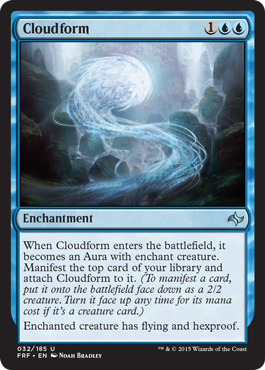
You'll still manifest the top card of your library even if the "Form" isn't on the battlefield as its enters-the-battlefield ability resolves.
If you have no cards in your library as the ability resolves, the "Form" will be put into its owner's graveyard as a state-based action.
If the enchanted creature is turned face up, the "Form" will continue to enchant it.
Cycle: Sieges
The Sieges are a cycle of enchantments that ask you to declare your allegiance as they enter the battlefield.
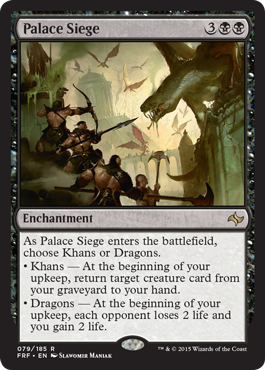
Each Siege will have one of the two listed abilities, depending on your choice as it enters the battlefield.
The words "Khans" and "Dragons" are anchor words, connecting your choice to the appropriate ability. Anchor words are a new rules concept. "[Anchor word] — [Ability]" means "As long as you chose [anchor word] as this permanent entered the battlefield, this permanent has [ability]." Notably, the anchor word "Dragons" has no connection to the creature type Dragon.
Each of the last two abilities is linked to the first ability. They each refer only to the choice made as a result of the first ability. If a permanent enters the battlefield as a copy of one of the Sieges, its controller will make a new choice for that Siege. Which ability the copy has won't depend on the choice made for the original permanent.
Cycle: Creatures with Modal Enters-the-Battlefield Abilities
This set includes a cycle of creatures with modal enters-the-battlefield abilities. For each, you may choose either to put a +1/+1 counter on the creature or for another effect to happen.
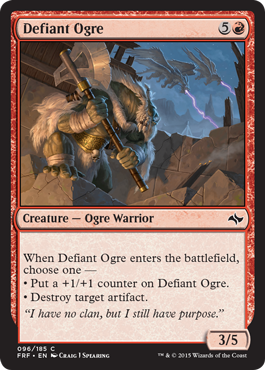
You choose which mode you're using as you put the ability on the stack, after the creature has entered the battlefield. Once you've chosen a mode, you can't change that mode even if the creature leaves the battlefield in response to that ability.
If a mode requires a target and there are no legal targets available, you must choose the mode that adds a +1/+1 counter.
Abzan is the white-black-green clan. Its clan icon is a crossed pair of dragon scales. Dromoka is the dragon who embodies the Abzan ideal of endurance.
Bolster is a new keyword action that puts +1/+1 counters on your smallest creature, ensuring there are no weak links in your army.
The official rules for bolster are as follows:
701.30. Bolster
701.30a "Bolster N" means "Choose a creature you control with the least toughness or tied for least toughness among creatures you control. Put N +1/+1 counters on that creature."
Bolster itself doesn't target any creature, though some spells and abilities that bolster may have other effects that target creatures. For example, you could put counters on a creature with protection from white with Abzan Skycaptain's bolster ability.
You determine which creature to put counters on as the spell or ability that instructs you to bolster resolves.
Jeskai Keyword: Prowess
Jeskai is the blue-red-white clan. Its clan icon is a dragon eye. Ojutai is the dragon who embodies the Jeskai ideal of cunning.
Prowess is a returning keyword that gives a creature a size bonus whenever you cast a noncreature spell. It hasn't changed since its appearance in the Khans of Tarkir set.
The official rules for prowess are as follows:
702.107. Prowess
702.107a Prowess is a triggered ability. "Prowess" means "Whenever you cast a noncreature spell, this creature gets +1/+1 until end of turn."
702.107b If a creature has multiple instances of prowess, each triggers separately.
Any spell you cast that doesn't have the type creature will cause prowess to trigger. If a spell has multiple types, and one of those types is creature (such as an artifact creature), casting it won't cause prowess to trigger. Playing a land also won't cause prowess to trigger.
Prowess triggers only once for any spell, even if that spell has multiple types.
Prowess goes on the stack on top of the spell that caused it to trigger. It will resolve before that spell.
Once it triggers, prowess isn't connected to the spell that caused it to trigger. If that spell is countered, prowess will still resolve.
Sultai Keyword: Delve
Sultai is the black-green-blue clan. Its clan icon is a single dragon fang. Silumgar is the dragon who embodies the Sultai ideal of ruthlessness.
Delve is a returning keyword that lets you exile cards from your graveyard to help pay for spells. It hasn't changed since its appearance in the Khans of Tarkir set.
The official rules for delve are as follows:
702.65. Delve
702.65a Delve is a static ability that functions while the spell with delve is on the stack. "Delve" means "For each generic mana in this spell's total cost, you may exile a card from your graveyard rather than pay that mana." The delve ability isn't an additional or alternative cost and applies only after the total cost of the spell with delve is determined.
702.65b Multiple instances of delve on the same spell are redundant.
You exile cards from your graveyard at the same time you pay the spell's cost. Exiling a card this way is simply another way to pay that cost.
Delve doesn't change a spell's mana cost or converted mana cost. For example, the converted mana cost of Tasigur's Cruelty is 6 even if you exiled three cards to cast it.
You can't exile cards to pay for the colored mana requirements of a spell with delve.
You can't exile more cards than the generic mana requirement of a spell with delve. For example, you can't exile more than five cards from your graveyard to cast Tasigur's Cruelty.
Because delve isn't an alternative cost, it can be used in conjunction with alternative costs.
Mardu Keyword: Dash
Mardu is the red-white-black clan. Its clan icon is a pair of dragon wings. Kolaghan is the dragon who embodies the Mardu ideal of speed.
Dash is a keyword that lets you cast creature spells for an alternative cost, giving the creature haste and returning it to its owner's hand at the end of the turn.
The official rules for dash are as follows:
702.108. Dash
702.108a Dash represents three abilities: two static abilities that function while the card with dash is on the stack, one of which may create a delayed triggered ability, and a static ability that functions while the object with dash is on the battlefield. "Dash [cost]" means "You may cast this card by paying [cost] rather than its mana cost," "If you chose to pay this spell's dash cost, return the permanent this spell becomes to its owner's hand at the beginning of the next end step," and "As long as this permanent's dash cost was paid, it has haste." Paying a card's dash cost follows the rules for paying alternative costs in rules 601.2b and 601.2e–g.
If you choose to pay the dash cost rather than the mana cost, you're still casting the spell. It goes on the stack and can be responded to and countered. You can cast a creature spell for its dash cost only when you otherwise could cast that creature spell. Most of the time, this means during your main phase when the stack is empty.
If you pay the dash cost to cast a creature spell, that card will be returned to its owner's hand only if it's still on the battlefield when its triggered ability resolves. If it dies or goes to another zone before then, it will stay where it is.
You don't have to attack with the creature with dash unless another ability says you do.
If a creature enters the battlefield as a copy of or becomes a copy of a creature whose dash cost was paid, the copy won't have haste and won't be returned to its owner's hand.
Temur Ability Word: Ferocious
Temur is the green-blue-red clan. Its clan icon is a dragon's claws. Atarka is the dragon who embodies the Temur ideal of savagery.
Ferocious is a returning ability word that appears in italics at the beginning of abilities that improve if you control a creature with power 4 or greater. (An ability word has no rules meaning.) It hasn't changed since its appearance in the Khans of Tarkir set.
Some ferocious abilities that appear on instants and sorceries use the word "instead." These spells have an upgraded effect if you control a creature with power 4 or greater as they resolve. For these, you only get the upgraded effect, not both effects.
Ferocious abilities of instants and sorceries that don't use the word "instead" will provide an additional effect if you control a creature with power 4 or greater as they resolve.
See the "Card-Specific Notes" section for cards with static or triggered ferocious abilities and more information about how they work.
New Keyword Action: Manifest
The Spirit Dragon Ugin and his magic are very much alive in Tarkir's past. Manifest is a new keyword action that puts cards onto the battlefield face down as 2/2 creatures, hiding their true identities. If a creature card is put onto the battlefield this way, you can turn it face up at any time by paying its mana cost.
The official rules for manifest are as follows:
701.31. Manifest
701.31a "Manifest [a card]" means "Put [that card] onto the battlefield face down." That permanent is a 2/2 creature with no text, no name, no subtypes, and no mana cost. That permanent is a manifested permanent as long as it's face down. The effect defining its characteristics works any time the card is face down and ends when it's turned face up.
701.31b Any time you have priority, you may turn a manifested permanent you control face up. This is a special action that doesn't use the stack (see rule 115.2b). To do this, show all players that the card representing that permanent is a creature card and what its mana cost is, pay that cost, then turn the permanent face up. The effect defining its characteristics while it was face down ends, and it regains its normal characteristics. If the card representing that permanent isn't a creature card or doesn't have a mana cost, it can't be turned face up this way.
701.31c If a card with morph is manifested, its controller may use the procedure described in rule 702.36d to turn a face-down permanent with morph face up rather than the procedure described above to turn a manifested permanent face up.
701.31d If an effect instructs a player to manifest multiple cards from his or her library, those cards are manifested one at a time.
701.31e A face-down permanent represented by an instant or sorcery card can't be turned face up. If an effect instructs a player to turn one face up, its controller reveals it and leaves it face down. Abilities that trigger whenever a permanent is turned face up won't trigger.
701.31f See rule 707, "Face-Down Spells and Permanents," for more information.
The face-down permanent is a 2/2 creature with no name, mana cost, creature types, or abilities. It's colorless and has a converted mana cost of 0. Other effects that apply to the permanent can still grant or change any of these characteristics.
Any time you have priority, you may turn a manifested creature face up by revealing that it's a creature card (ignoring any type-changing effects that might be applying to it) and paying its mana cost. This is a special action. It doesn't use the stack and can't be responded to.
If a manifested creature would have morph if it were face up, you may also turn it face up by paying its morph cost.
Unlike a face-down creature that was cast using the morph ability, a manifested creature may still be turned face up after it loses its abilities if it's a creature card.
Because the permanent is on the battlefield both before and after it's turned face up, turning a permanent face up doesn't cause any enters-the-battlefield abilities to trigger.
Because face-down creatures don't have a name, they can't have the same name as any other creature, even another face-down creature.
A permanent that turns face up or face down changes characteristics but is otherwise the same permanent. Spells and abilities that were targeting that permanent, as well as Auras and Equipment that were attached to the permanent, aren't affected.
Turning a permanent face up or face down doesn't change whether that permanent is tapped or untapped.
At any time, you can look at a face-down permanent you control. You can't look at face-down permanents you don't control unless an effect instructs you to do so.
If a face-down permanent you control leaves the battlefield, you must reveal it. You must also reveal all face-down spells and permanents you control if you leave the game or if the game ends.
You must ensure that your face-down spells and permanents can easily be differentiated from each other. You're not allowed to mix up the cards that represent them on the battlefield in order to confuse other players. The order they entered the battlefield should remain clear. Common methods for indicating this include using markers or dice, or simply placing them in order on the battlefield. You must also track how each became face down (manifested, cast face down using the morph ability, and so on).
There are no cards in the Fate Reforged set that would turn a face-down instant or sorcery card on the battlefield face up, but some older cards can try to do this. If something tries to turn a face-down instant or sorcery card on the battlefield face up, reveal that card to show all players it's an instant or sorcery card. The permanent remains on the battlefield face down. Abilities that trigger when a permanent turns face up won't trigger, because even though you revealed the card, it never turned face up.
Some older Magic sets feature double-faced cards, which have a Magic card face on each side rather than a Magic card face on one side and a Magic card back on the other. The rules for double-faced cards are changing slightly to account for the possibility that they are manifested. If a double-faced card is manifested, it will be put onto the battlefield face down. While face down, it can't transform. If the front face of the card is a creature card, you can turn it face up by paying its mana cost. If you do, its front face will be up. A double-faced card on the battlefield still can't be turned face down.
The Three "Forms"
Three enchantment cards in the Fate Reforged set have enters-the-battlefield abilities that turn them into Auras, manifest a creature, and attach them to the manifested creature.
You'll still manifest the top card of your library even if the "Form" isn't on the battlefield as its enters-the-battlefield ability resolves.
If you have no cards in your library as the ability resolves, the "Form" will be put into its owner's graveyard as a state-based action.
If the enchanted creature is turned face up, the "Form" will continue to enchant it.
Cycle: Sieges
The Sieges are a cycle of enchantments that ask you to declare your allegiance as they enter the battlefield.
Each Siege will have one of the two listed abilities, depending on your choice as it enters the battlefield.
The words "Khans" and "Dragons" are anchor words, connecting your choice to the appropriate ability. Anchor words are a new rules concept. "[Anchor word] — [Ability]" means "As long as you chose [anchor word] as this permanent entered the battlefield, this permanent has [ability]." Notably, the anchor word "Dragons" has no connection to the creature type Dragon.
Each of the last two abilities is linked to the first ability. They each refer only to the choice made as a result of the first ability. If a permanent enters the battlefield as a copy of one of the Sieges, its controller will make a new choice for that Siege. Which ability the copy has won't depend on the choice made for the original permanent.
Cycle: Creatures with Modal Enters-the-Battlefield Abilities
This set includes a cycle of creatures with modal enters-the-battlefield abilities. For each, you may choose either to put a +1/+1 counter on the creature or for another effect to happen.
You choose which mode you're using as you put the ability on the stack, after the creature has entered the battlefield. Once you've chosen a mode, you can't change that mode even if the creature leaves the battlefield in response to that ability.
If a mode requires a target and there are no legal targets available, you must choose the mode that adds a +1/+1 counter.